
Speech, Voice and Swallowing
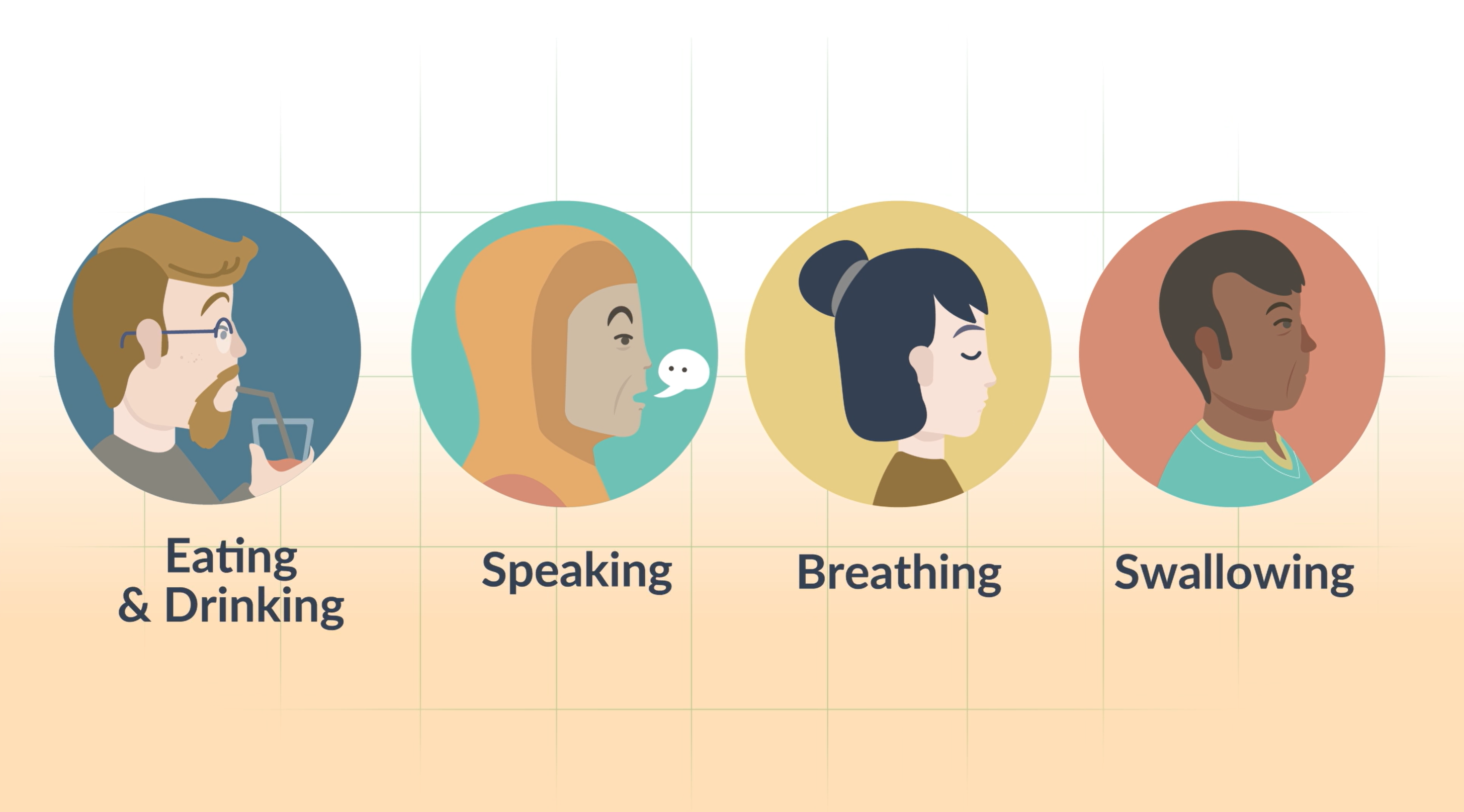
Surgery or treatment for Head and Neck Cancer may cause changes to core abilities we all take for granted.
This information aims to help you understand how the treatment of head and neck cancer may affect speech, voice and swallowing. It may help answer some of your questions and help you think of other questions that you may want to ask your cancer care team; it is not intended to replace advice or discussion between you and your cancer care team.
How Head and Neck Cancer May Affect Speech, Voice and Swallowing
- Treatment for head and neck cancer may cause changes to parts of the mouth (lips, jaw, teeth, tongue or palate) or throat (pharynx, larynx), which can affect the ability to speak and swallow.
- If you have problems with swallowing (known as dysphagia), you may notice that:
-
- it is difficult to keep food or drink in your mouth
- you can’t chew food properly
- you have trouble clearing food from your mouth or throat
- it hurts to swallow
- you need to clear your throat or cough while eating or drinking
- your voice sounds ‘gurgly’ after swallowing.
- Speech and voice problems can affect your daily life; it may cause feelings of frustration, stress and/or embarrassment, particularly if people have trouble understanding what you are saying. When you have speech or voice problems:
-
- It may be difficult to make specific sounds or say certain words.
- It can be more severe, where you struggle to say whole sentences.
- These changes may only last a short time, or they may be permanent.
- It can affect when you can return to work, use the telephone or express what you want or need.
- You may notice that your speech or voice becomes worse as you get tired or that it is worse in the morning and gets better as the day progresses.
- A speech pathologist is an expert in difficulties with communication and swallowing and may be involved during treatment and recovery. They will be able to give support and helpful advice.
Healthcare Professionals That You May See As Part of Cancer Care
If treatment is likely to, or already has caused changes to your speech, voice or swallowing, you can get help from a speech pathologist before, during and after your treatment. A speech pathologist may:
- Check that you are swallowing safely: often by watching you swallow some food and drink. Sometimes if more information is needed an x-ray (video fluoroscopy or modified barium swallow study) or camera (flexible endoscopic evaluation of swallowing or FEES) can be used to help find out if foods/fluids are going down the wrong way or getting stuck. Once the problem has been identified, your Speech Pathologist can help to find solutions or start swallowing therapy.
- Discuss the best food and liquid consistencies for you to swallow safely and comfortably: For example, they may advise you that thick fluids (which often move slower and stay together better) are safer to swallow than thin ones, like regular water. They may also talk to you about the texture of the food you eat. You may need help learning how prepare soft or pureed foods, or whether it is safe for you to eat mixed consistencies (part solid, part liquid), dry foods or crunchy foods. These recommendations will be tailored to the type of treatment you will have/have had, and the difficulties you are experiencing.
- Show you safe swallowing strategies: such as changing your head position, swallowing with more force, holding your breath while swallowing or swallowing multiple times.
- Give you exercises to help your swallowing: these may involve exercises to try and maintain your swallowing function before and/or during radiotherapy. Exercises may also be provided after surgery or radiotherapy to try and improve the strength and movement of swallowing muscles or structures such as your tongue, lips or jaw.
- Give you advice about how to enjoy meals more or resume eating and drinking in social situations: often people with problems swallowing avoid eating out, restrict the types of food and drink they eat or get anxious at mealtimes. Addressing these problems can help to improve your quality of life.
- Listen to your speech and voice: sometimes this would have changed as a result of your cancer or the treatment you are having or have received. Your Speech Pathologist can find out how this affects you personally in your daily life.
- Give you exercises or tips to help your speech and voice: usually the aim is to improve your speech or voice, but sometimes this is not possible, and the focus will be on how to get around the problem. You’ll be given information to help you remember what you need to do and why.
- Help you plan other ways of communicating: there are many ways of communicating such as writing, facial expressions, gestures, pre-recorded messages or using computer generated speech from text or even pictures. This might be a temporary or permanent option depending on your situation.
- Show you how to use devices or aids: such as voice amplifiers and voice restoration devices (if you need them).
You may also get help from a dietitian who can provide information regarding your diet and nutrition, and in some cases recommend a feeding tube if you are not getting enough nutrition.
- A feeding tube might be used before, during or after your treatment depending on your specific circumstances.
- If you have been having problems swallowing for a long time or have lost a lot of weight, a feeding tube may be recommended before your start treatment. This will help make sure you get the nutrition, medication and water that your body needs.
- Sometimes a feeding tube is used in response to problems you are experiencing. For some people, having a feeding tube inserted early can help prevent stress, excessive weight loss, malnutrition or dehydration.
- Feeding tubes can be temporary or permanent. There are different types:
-
- Nasogastric (NG) tubes are inserted through your nose into your stomach
- Percutaneous endoscopic gastrostomy (PEG) tubes go through your abdominal wall into your stomach.
- While both of these can be removed, PEG tubes are better for long-term swallowing problems (over 6 weeks). You can continue to eat and drink with either tube, following the recommendations made by your Speech Pathologist and Doctor.
Suggested Changes To Make During Treatment and Recovery
- During your recovery from surgery, you may find that eating or drinking is difficult or that different consistencies of fluids or foods are easier to swallow. This generally changes as you continue to recover. Follow the specific recommendations that have been made by your cancer care team.
- During radiation therapy, it is likely that swallowing may become more difficult, and you may need to change the consistencies of the food/liquids you eat. Usually this is temporary. Side effects (such as dry mouth, change or loss in taste, thickened mucous/phlegm and pain when swallowing) can reduce your enjoyment of or ability to continue eating and drinking, so follow the advice given by your cancer care team to manage these symptoms.
- Depending on your treatment it is not unusual that a feeding tube is used towards the later part of radiation therapy – tube feeds will be managed by a dietitian.
- If you need a feeding tube, it's still important to try and keep you swallowing so that your muscles don’t weaken. If you are still able to have some foods/liquids, the speech pathologist will continue to assess your swallowing regularly throughout treatment. The side effects of radiotherapy last for different amounts of time. Sometimes swallowing problems start improving a few weeks after your radiotherapy finishes and sometimes can last for a lot longer. Ask your cancer care team what they anticipate your period of recovery will be.
- If you notice any changes to your swallowing or your jaw/mouth opening throughout your treatment and recovery you should contact your speech pathologist to arrange a review assessment.
- If you are having difficulty with your speech or voice, you may find that slowing down your speech, facing people when talking to them, reducing background noise, or using gestures can help.
Questions to Ask Your Doctor
- Will my cancer treatment affect my speech, voice and swallowing?
- Do you think I would benefit from referral to a speech pathologist and/or dietitian?
- Should I be using special aids or strategies to help with my speech, voice or swallowing?
- Will doing exercises for my speech, swallow and voice before my treatment help me?
- Will my speech or voice problem be permanent?
- Will I have permanent changes to my ability to eat and drink?
- Will I need to change my diet after my surgery or after radiation treatment ends?
Finding Additional Support
- The Cancer Council provides an information and support line to Australians affected by cancer. You can call 13 11 20 to speak with a specialist cancer professional about anything to do with cancer, including difficulties with speech, voice and swallowing.
- You may download the Cancer Institute NSW booklet on managing voice problems during and after radiation therapy.
- You can hear more about speech therapy from Macmillan Cancer Support.


